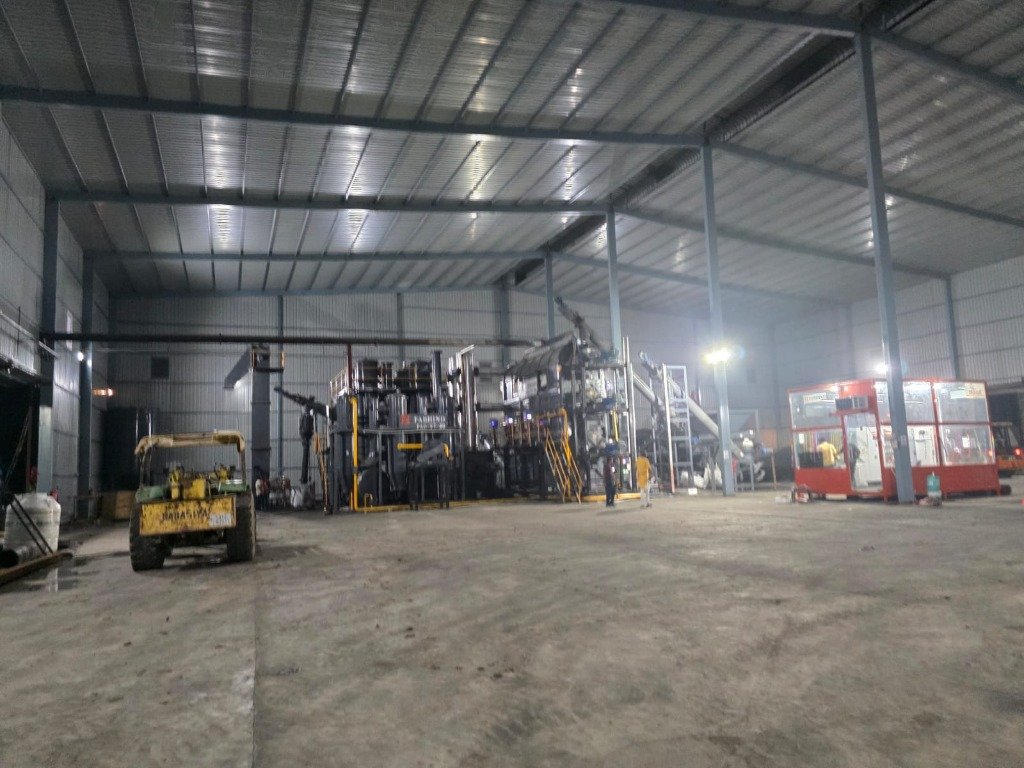
PRODUCT OVERVIEW
The VT-30 TPD Fully Continuous Waste Tyre Pyrolysis Plant is an industrial-scale tyre recycling solution designed for the continuous thermal processing of waste tyres with minimal manual intervention. With a nominal processing capacity of 30 TPD (Tonnes Per Day), the plant is suitable for businesses looking for consistent production, automated operation, and efficient utilization of waste tyres.
The continuous pyrolysis process converts waste tyres into valuable recoverable products such as pyrolysis oil and carbon black, while process gas can be utilized as a fuel source within the system, depending on plant configuration and operating conditions.
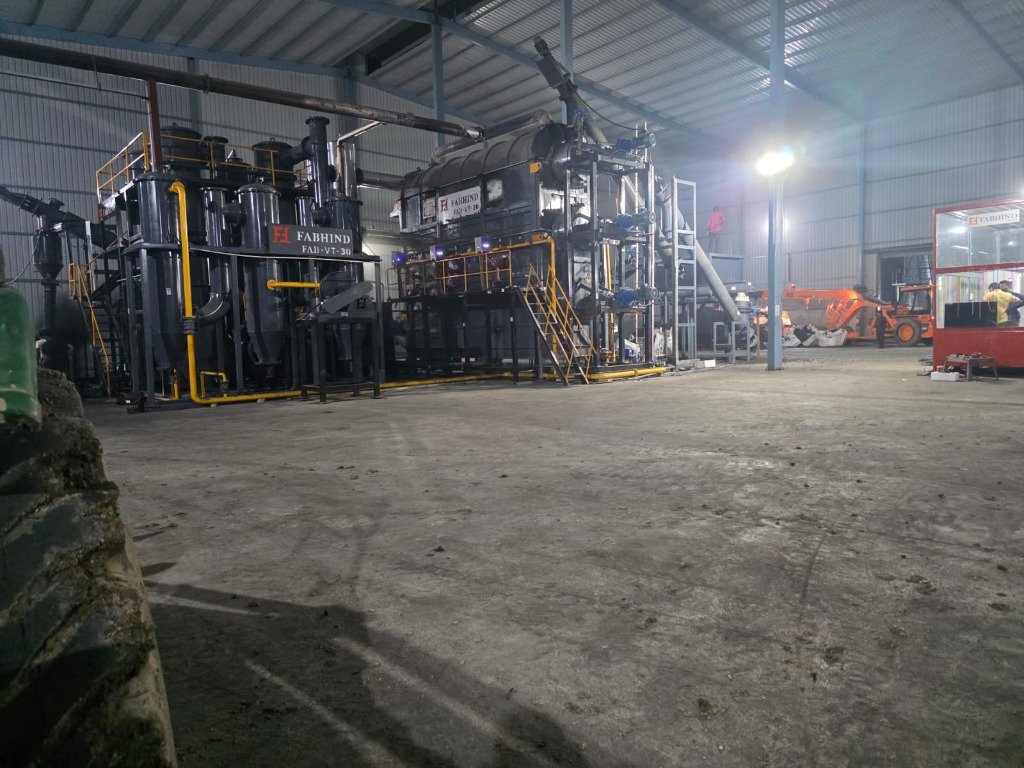
Industrial Installation - FAB-VT-30 Reactor & Condenser System
Full Factory View - Commercial Recycling Setup
KEY FEATURES
Designed for high-volume waste tyre processing and continuous commercial operations.
Automated material flow system for uninterrupted daily operation.
Integrated sensors provide real-time thermal monitoring and automatic control.
Steady output stream of oil and carbon black without stopping production cycles.
Dramatically lower labor requirements compared to traditional batch type plants.
Non-condensable gas is recycled back into the heating system as a fuel source.
Multi-stage cooling and condensation network for maximum oil recovery.
Heavy-duty reactor construction built for demanding 24/7 recycling applications.
Single interface for simplified operations, monitoring, and parameter adjustments.
High grade thermal steel alloy reactor ensuring long service lifespan.
Ideal for commercial tyre recyclers upgrading from manual batch plants.
3D ENGINEERING SPECIFICATION & MODEL DIAGRAMS
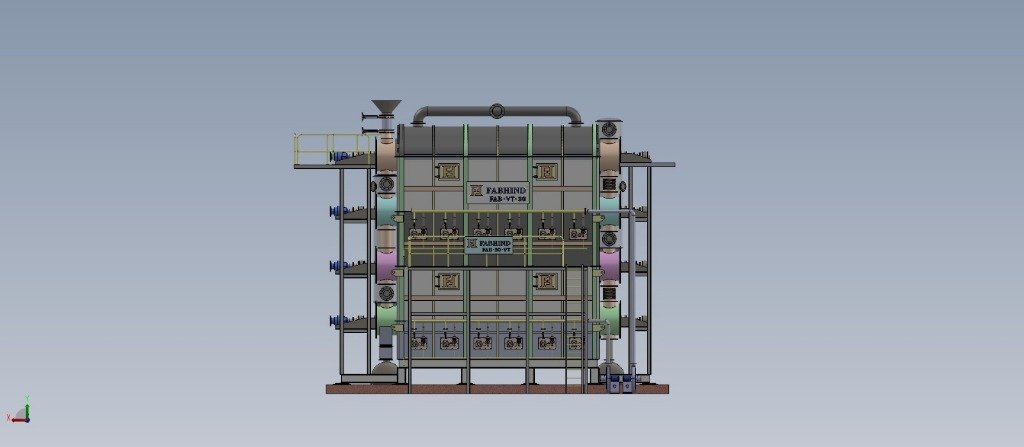
Front View CAD Diagram
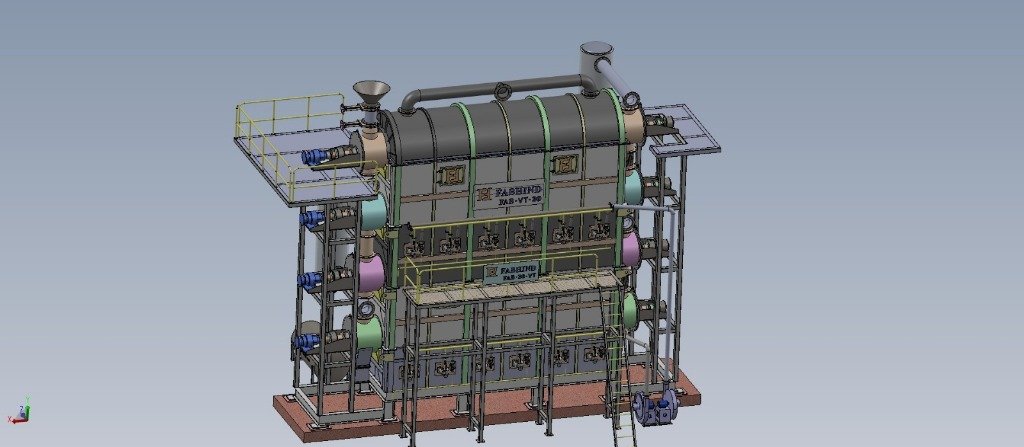
Isometric Side View CAD Model
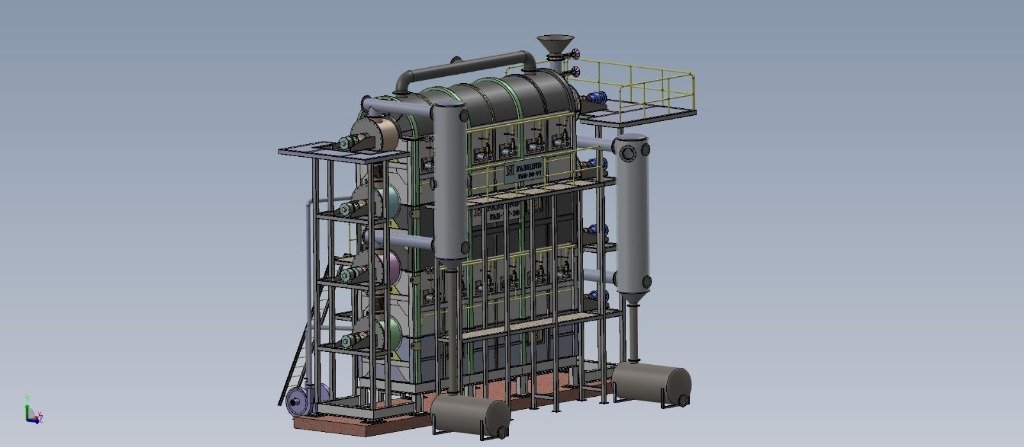
Perspective CAD View
TYPICAL OUTPUT STREAMS
The exact yield varies according to tyre composition, feedstock quality and operating conditions.
1. Pyrolysis Oil
A liquid hydrocarbon product that can be further processed or utilized according to applicable specifications and fuel regulations.
2. Carbon Black / Pyrolysis Char
Solid carbon-rich material recovered after thermal decomposition of the tyre, suitable for industrial fuel or rubber manufacturing.
3. Non-Condensable Gas
Process gas generated during pyrolysis, which can potentially be reused within the plant as a clean fuel source.
BATCH TYPE VS. FULLY CONTINUOUS PYROLYSIS PLANT
| PARAMETER | BATCH TYPE PLANT | FULLY CONTINUOUS PLANT (VT-30 TPD) |
|---|---|---|
| Operation | Batch-by-batch | Continuous |
| Feeding | Periodic / manual or semi-automatic | Continuous |
| Discharge | Periodic | Continuous |
| Manual Intervention | Generally higher | Generally lower |
| Production Flow | Stop-start cycles | Continuous production |
| Process Consistency | Depends on each batch | More consistent process conditions |
| Labour Requirement | Usually higher | Usually lower |
| Automation | Low to medium | Medium to high, depending on configuration |
| Scalability | Suitable for smaller operations | Better suited to higher-throughput operations |
| Downtime Between Cycles | Required | Reduced |
| Initial Investment | Generally lower | Generally higher |
| Maintenance Complexity | Relatively simpler | More complex |
| Operator Skill | Moderate | Higher technical requirement |
| Production Planning | Batch-based | Continuous-flow based |
Batch Type Plant — Pros & Cons
PROS:
- Lower initial investment in many configurations
- Simpler mechanical design
- Easier to understand and operate
- Suitable for smaller-scale operations
- Individual batches can be inspected and controlled
- Maintenance can be scheduled between production cycles
CONS:
- Production is interrupted between batches
- More manual loading and unloading
- Higher operator involvement
- Greater variation can occur between batches
- More downtime associated with heating, cooling and unloading cycles
- Scaling production may require additional reactors or equipment
Fully Continuous Plant — Pros & Cons
PROS:
- Continuous feed and discharge
- Better suited for high-volume tyre processing
- Reduced manual material handling
- More consistent production flow
- Better utilization of plant operating time
- Lower interruption between processing cycles
- Suitable for commercial-scale recycling operations
- Greater scope for automation and centralized monitoring
CONSIDERATIONS:
- Higher initial capital investment
- More sophisticated equipment and controls
- Requires trained technical operators
- Maintenance requires greater technical expertise
- Feed preparation and material consistency become more important
- A problem in a critical section can affect the continuous production line
WHY CONSIDER VT-30 TPD?
For businesses processing waste tyres at a commercial scale, the VT-30 TPD Fully Continuous Waste Tyre Pyrolysis Plant is designed around uninterrupted material flow rather than individual batch cycles. This can help reduce manual handling and improve production continuity.